Featured and Trending
Virtual Receptionist for Doctors: No-Shows and Missed Calls
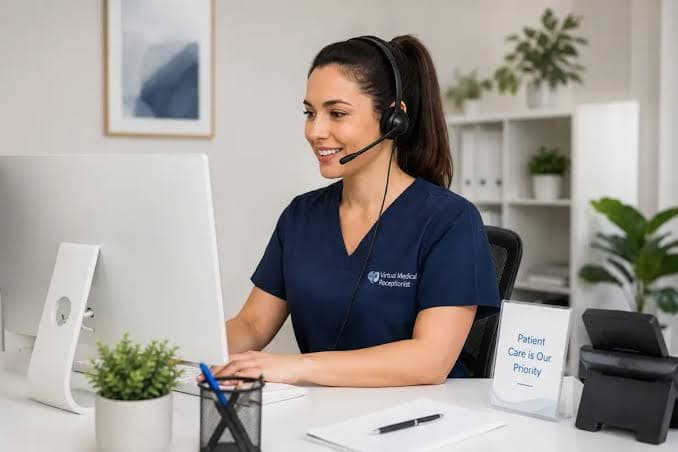
For a physician, missed calls rarely look like missed calls. They look like a stack of phone messages in the EHR inbox at 7 p.m. They look like a refill request that came in three times. They also look like an empty 10:40 slot the next morning from a patient who meant to reschedule. That is the problem a virtual receptionist for doctors is supposed to solve.
A virtual receptionist for doctors answers patient calls and books and reschedules visits. They also send reminders and handle the requests behind each call, from refills to referrals. Whether this reduces missed calls and no-shows depends on one thing. Can the person on the phone resolve the request, or can they only take a message for the doctor?
What a virtual receptionist for doctors is expected to fix
The standard pitch covers the basics. The service answers calls during the morning rush and sends reminders on schedule. Nobody at the check-in window has to choose between the patient in front of them and the one on hold.
Many services sold under this label rely on a shared pool of receptionists. An agent answers, captures the reason for the call, and routes a message to the practice. That keeps the phone from ringing out. However, it doesn’t finish anything.
Why a message isn’t an answered call
Patients rarely call a doctor’s office without a task in mind. They call about a refill the pharmacy says is pending, a prior authorization holding up a prescription, or a referral that hasn’t come through. Others ask about a test result or need to move a visit. A message records the question. It doesn’t produce an answer.
As a result, the patient calls again. The American Academy of Family Physicians’ practice management journal has long made the point. In a typical practice, a high share of phone calls are repeat calls, because patients keep calling until the issue is resolved. Every relayed message is a likely second call, and every second call competes with new calls for the same lines. A practice that tracks only how fast it answers the phone never sees the volume its own process creates.
The message also has to land somewhere. In many clinics, it lands in the doctor’s inbox or with a medical assistant who is already rooming patients. Edge’s survey of 254 U.S. healthcare leaders (January 2026) found that 41% have staff spending 10 to 20 hours a week on manual administrative tasks. In addition, 45% rely on overtime to absorb spikes. For a physician, that overtime can look like callbacks and charting after the last patient leaves.
How missed calls turn into no-shows
The same mechanism empties the schedule. A reminder prompts a decision: the patient confirms, or realizes Thursday won’t work. That second group has to reach the office. A clinic profiled by the Texas Medical Association called its no-show patients to ask why. Not being able to get through to cancel, or even leave a voicemail, ranked among the top three reasons.
An early cancellation helps only if someone works the waitlist and fills the slot. Otherwise, it leaves the same empty chair as a no-show, just with more notice. Meanwhile, a patient who could have taken the visit keeps waiting.
How to reduce missed calls in a medical practice
Reducing missed calls in a medical practice comes down to a few habits, each simple on its own:
- Resolve requests on the first call wherever protocol allows: reschedule the visit in the EHR, route the refill with everything the provider needs, and tell the patient exactly what happens next
- Separate phone and message work from in-person work, so the medical assistant rooming patients isn’t also returning calls
- Return every missed call and voicemail the same day, and document the outcome in the chart
- Call the waitlist the same day a cancellation comes in, and call no-shows the same day to rebook
None of this is complicated. However, all of it takes someone with time, access to the doctor’s schedule and inbox, and enough familiarity with that doctor’s preferences to act without asking.
What a virtual receptionist for a doctor’s office looks like when it works
How the dedicated team member model works
Edge’s medical clients are mostly physicians: owners of specialty clinics, and physician leaders inside large health systems. The model is the same in both. A dedicated Edge team member works only for that client, inside its own EHR. This person is often a Medical Scheduling Coordinator or Patient Care Coordinator. Edge can dedicate them to a single physician, a clinic or a department.
They answer and return calls. They book and reschedule against the provider’s templates. They route refill and referral requests with what the provider needs, and they document each interaction in the chart. They also take direct messages from the doctor and the in-office team. In-office staff keep the work that needs a person in the room.
Training, security, and retention
Edge pre-vets each team member. It certifies them through Edge Edu in medical workflows and EHR use, and they complete documented HIPAA training. Edge signs a BAA, and the client controls system access and can revoke it at any time. Edge Talent work from secure Edge Campuses in Latin America and Pakistan. They also tend to stay far longer than local hires in the same roles. That matters here, because a dedicated person becomes more useful with every month they spend learning one doctor’s patients.
Results at DHR Health, Saluja, and CLS Health
DHR Health shows how the model spreads inside a large organization. The physician-owned system has more than 700 physicians across 133 locations. It started with a pilot of three to five Edge team members and scaled to 23 within 12 months. As a result, it recorded a 71% increase in productivity. “Edge provided well trained professionals that were able to adapt to our clinic’s needs and help facilitate communication between patients, providers and office staff which has resulted in increased patient satisfaction,” said Dr. Marcel Twahirwa of the DHR Health Diabetes & Endocrinology Institute.
For example, Saluja Medical Associates is a 16-physician practice in Baltimore that takes about 450 calls a day. A dedicated Edge team took over inbound calls, scheduling, confirmations and callbacks. As a result, the answer rate climbed from a low of 75 to 80% to above 90%. The team now consistently captures same-day appointments that used to slip away.
Dr. Naureen Alim of CLS Health once ran her rheumatology practice with a single in-office medical assistant. That assistant handled phones, faxes, records and refills on top of patient care. Her Edge team member now handles everything outside direct patient contact and has stayed with her for more than two years.
The bar, and what sits above it
The minimum bar for any virtual receptionist is an answered phone, reliable reminders and HIPAA-safe handling of patient information. However, that bar doesn’t stop the second call or refill the slot. That takes a person who works for the doctor, resolves what comes in and closes the loop the same day. Edge builds that into a dedicated team member, for one physician or a department of them. As a result, yesterday’s phone messages stop following the doctor home, and the schedule they see in the morning is the one they run. That is capacity, not headcount, and the return is peace of mind.
FAQ
What does a virtual receptionist for doctors do?
Answers and returns patient calls, books and reschedules visits, sends reminders and routes requests like refills to the care team.
Can a virtual receptionist reduce no-shows?
Yes, when patients can reach someone who reschedules on the call and backfills cancelled slots the same day.
How do you reduce missed calls in a medical practice?
Resolve requests on the first call so patients don’t call back, and return every missed call the same day.
Is a virtual receptionist for a doctor’s office HIPAA compliant?
It should be. Require a signed BAA and documented HIPAA training for anyone handling patient calls.
Can each physician in a group have their own Edge team member?
Yes. Edge can dedicate a team member to a single physician, a clinic or a department within one client.
More from Medical

Virtual Reception: How It Improves Patient Experience
Watch a busy check-in desk for ten minutes and the problem is obvious. A patient arrives, and the person behind the glass holds up one finger, phone pressed to one ear. The patient ahead is still at the window because her insurance didn’t verify. On the line, a caller is on hold for the third …
AI Medical Receptionist vs. Human: Who Takes the Hard Calls?
Edge’s survey of 254 U.S. healthcare leaders (January 2026) found that 56.3% face administrative backlogs weekly or daily. At the front desk, that backlog sounds like phones ringing out by nine, a full voicemail box by ten, and a patient in the lobby waiting while three lines blink. It’s often the week a practice starts …

Virtual Front Desk for Medical Offices: Cost Guide
If you’ve already read what a virtual front desk covers, the next question is more practical: how does it actually get billed, set up, and connected to the systems your practice already runs. Most vendor pages skip straight to a number. The number matters less than the structure behind it, and the structure is where …